
Reading OnlyFans Ranking Cards Without Overreading
OnlyFans ranking cards are reference sheets, not verdicts, and reading them well means knowing which numbers describe a page’s habits and which ones just describe its noise. A card can tell you a subscription costs $9.99 and the page posted eighteen times last month. It cannot tell you whether those posts were worth the money. This article breaks down the data fields you actually see, explains why external rankings exist, and shows how to weigh price history, activity, and stability against your own budget. BestOnlyFans publishes cards like these, and the point of reading them carefully is to keep them in the role of a starting filter.

What a Ranking Card Actually Measures
A ranking card is a compressed snapshot of a creator page. Each field answers one narrow question: what does entry cost, how often does the page update, how much media sits behind the paywall, and when was anything last posted. None of those fields measure quality directly.

Paid pages run from $4.99 at the minimum up to $49.99 at the maximum, and most cluster between $5 and $10. Free pages show $0 and earn through pay-per-view messages and tips instead.

- Subscription price, shown as a monthly figure or as $0 for free pages
- Follower count, which reflects audience size rather than activity
- Post frequency, usually expressed as posts per week or per month
- Media count, the total photos and videos published to date
- Last-update timestamp, the single most useful freshness signal
- PPV indicators, flagging whether paid messages carry unlock prices
A page with a $7.99 price, forty posts last month, and an update from yesterday behaves very differently from a page with the same price and nothing new in three weeks.
Why Rankings Exist When Search Does Not
There is no browse page, no category grid, and no search that surfaces unfamiliar creators to new subscribers. You find pages through links people share, and that is essentially it.
External publishers collect public page data, sort it into tables, and give subscribers a way to compare candidates side by side before committing money to a subscription.

Each publisher chooses its own fields, its own update schedule, and its own sorting logic, so two cards for the same page can disagree without either being wrong.
Because the platform itself provides no comparison tools, a ranking card is doing work the platform never intended to do.
Price History as the Strongest Signal
A price history tells you how the creator treats pricing over time, and that pattern is far more informative than any snapshot.
Promotional first months can sit below the $4.99 base floor, sometimes as low as $3 for the first month. That is a legitimate marketing move, but it means the sticker price on a card may not reflect what you pay in month two.
Existing access continues until the paid period ends, so a price change does not cut off current subscribers mid-cycle.
| Signal type | What it shows | How to use it |
|---|---|---|
| Stable price over months | Consistent pricing with no repeated discounting | Treat the listed figure as the real monthly cost |
| Rising base price | Creator adjusting value upward over time | Budget for the new figure, not the old one |
| Promotional first month | Discounted entry below the base minimum | Check the renewal price before subscribing |
| Frequent discount cycling | Entry price changing often | Expect volatility and compare more carefully |
The practical takeaway is simple. A page that has held the same price for a year is easier to plan around than one that swings between promotions every few weeks.
Activity Metrics and What They Miss
Post frequency and media totals are the most quoted activity figures, and they are genuinely useful for filtering. A page that has not updated in a month is a different proposition from one posting daily.
What activity figures cannot show is the part subscribers actually care about. Volume says nothing about whether the content matches your interests, how quickly messages get answered, or how aggressively pay-per-view unlocks appear inside direct messages.
- Content quality, which no counter can measure
- Message responsiveness and how quickly replies arrive
- PPV frequency inside DMs, which affects real monthly spend
- Whether posting is steady or arrives in bursts around promotions
- Whether older media stays accessible or gets removed
- How much of the best material sits behind separate unlocks
A page with two hundred posts and heavy PPV usage can cost far more per month than a page with sixty posts and no unlocks.

Stability Indicators vs Popularity Indicators
Popularity indicators are the ones that catch the eye: large follower counts, prominent badge placement, dramatic week-over-week growth. Stability indicators are quieter and predict the subscription experience far better.
A viral spike can double a follower count in a week and then flatten just as fast. If a card was captured during that spike, the ranking it produced reflects a moment, not a pattern.
- Check price history first and note whether the figure has held steady.
- Look for long unbroken subscription periods rather than one-month bursts.
- Verify posting cadence across several weeks, not a single busy weekend.
- Discount viral spikes and compare growth against the months before them.
- Weigh the last-update timestamp more heavily than total follower volume.
A creator posting three times a week for two years is a safer bet than one posting thirty times in a launch month and then going quiet.
Tip: when two cards show similar prices, compare their last-update timestamps before anything else. A page updated yesterday tells you more about current activity than any follower total, and it takes five seconds to check.
BestOnlyFans and Ranking Methodology
BestOnlyFans assembles public page data into comparison cards and publishes them for subscribers who have no native way to browse. The methodology matters as much as the numbers, because a card is only as useful as the fields behind it.
In this article’s own review process, cards were compared field by field: price, update recency, posting rhythm, and PPV flags. That kind of structured comparison is what separates a usable reference from a decorative table.
Before trusting any ranking source, ask how it actually works. The questions below apply to every publisher in this space, including this one.
- How often does the source refresh its data?
- Does it display price history or only the current figure?
- Does it separate free pages from paid pages clearly?
- Does it timestamp every entry so you know its age?
- Does it explain how positions are ordered?
- Does it list the fields it collects and why?
A source that answers those questions transparently is worth reading. One that publishes a bare ordered list without dates or method is not, because you have no way to judge whether the data is a week old or a year old.
When to Ignore a Ranking Card Entirely
Ranking cards optimize for comparison, and comparison is not always what you need. There are clear situations where a card adds nothing to the decision and your own preferences should carry the whole weight.
If your interest is narrow, a general ranking tells you almost nothing. A page ranked highly for broad appeal may have nothing in your specific area, and a lower-ranked page may match it exactly.
| Situation | Why the card misleads | Better approach |
|---|---|---|
| Narrow content preference | General rankings reward broad appeal | Filter candidates yourself against your interests |
| Short trial interest | Monthly rankings assume ongoing subscriptions | Look at the current month price only |
| Low-budget exploration | Position says nothing about total monthly spend | Set a cap and check PPV density first |
| Security concerns | Cards never assess account safety practices | Review your own settings before subscribing |
One category deserves special caution: anything that looks like a shortcut to a lower price. Phishing attempts often imitate login pages, and a card that links to a suspicious login window is a warning sign, not a convenience.
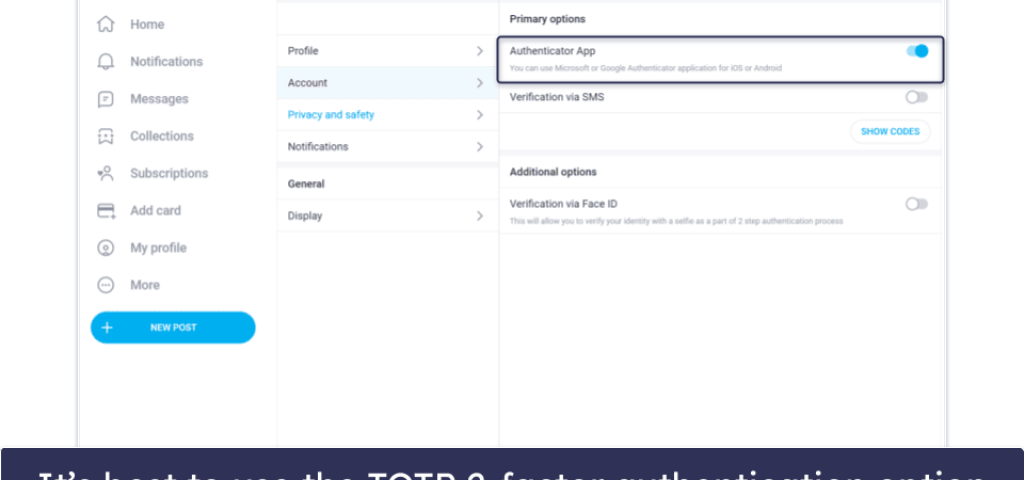
Verify that you are on the real payment page every time, and check the two-factor authentication settings on your own account before adding new subscriptions.
Building Your Own Shortlist From Cards
Cards are most useful as a funnel. You start with a wide pool, cut it down using durable signals, and end with a short list worth paying for one at a time.
A handful of $9.99 subscriptions plus a few PPV unlocks can quietly exceed what you intended to spend, and the card is the right place to notice that before checkout rather than after.
- Pull three to five candidates from the cards you are reading.
- Compare price history side by side rather than current prices alone.
- Check activity consistency across several weeks.
- Set a monthly budget cap and note where PPV could push past it.
- Subscribe to one page at a time and evaluate before adding another.
If you keep a written shortlist, comparing options becomes far easier than reading cards one at a time. Many subscribers find that a ranked index of the best only fans streamer pages is a reasonable starting point, provided the data is timestamped and you apply your own filters afterward.
First, remember that the card verification hold is $0.10 and gets refunded within days, so it never counts against your budget. Second, review your subscription list monthly and cancel what you have stopped opening.

None of this requires deep analysis. A few minutes comparing price history and update recency will outperform any single ranking position, because those two fields describe how a page behaves rather than how it performed in one measured week.
FAQ
Do OnlyFans ranking cards show real subscription prices?
Reputable cards show the listed subscription price, which for paid pages falls between $4.99 and $49.99. Note that promotional first months can sit below the base minimum, so confirm the renewal figure before subscribing.
How often do ranking sites update their data?
Check whether each entry carries a timestamp. A card without a date could be a week old or a year old, which makes the activity figures unreliable.
Can a high ranking card score mean a page is overpriced?
Position does not indicate value for money. A $12.99 page with steady daily posting may suit you better than a $5 page that rarely updates, depending on what you actually want from the subscription.
Should I subscribe based only on a ranking card position?
No. Treat the card as a filter, then check price history, posting consistency, and PPV density yourself. Set a budget cap, subscribe to one page at a time, and cancel anything you stop using.